
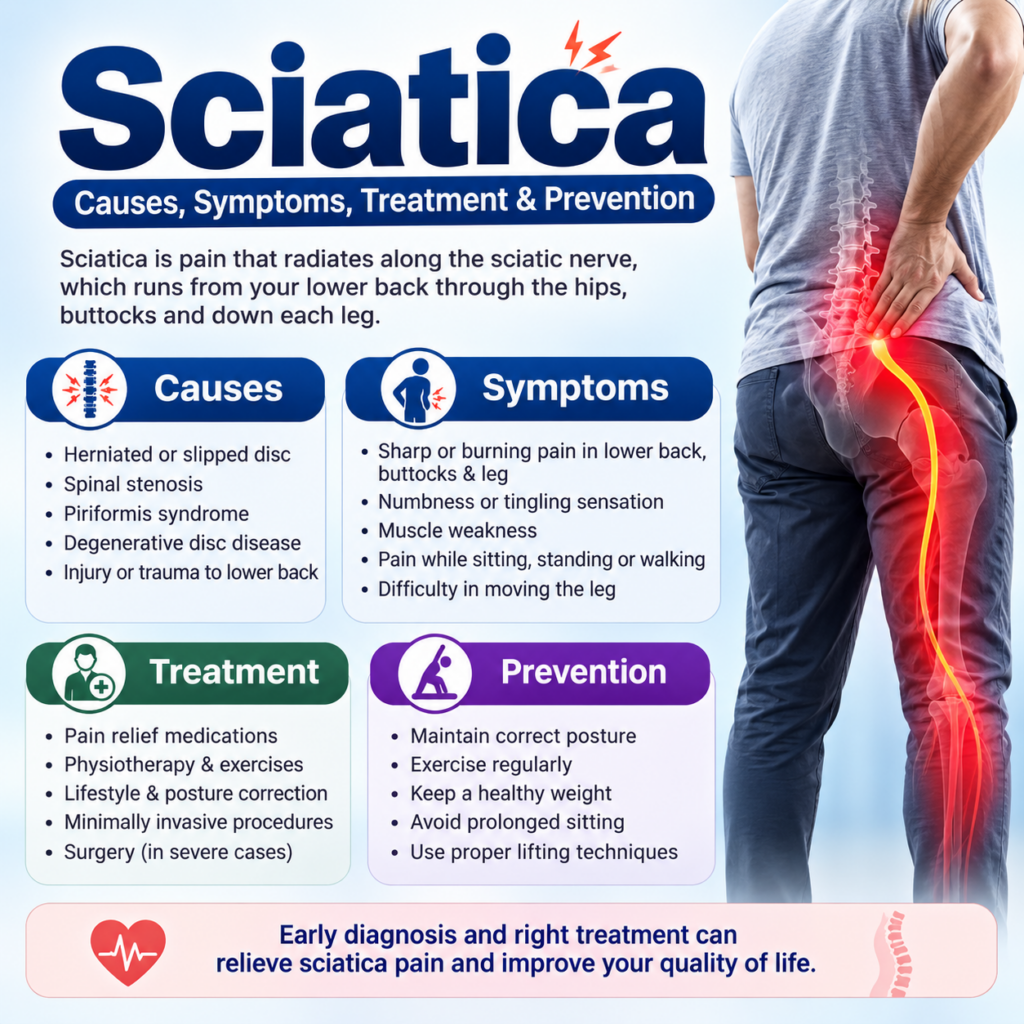
What is Sciatica?
Sciatica is a common condition that causes pain along the path of the sciatic nerve, the largest nerve in the human body. This nerve begins in the lower back, passes through the buttocks, and extends down each leg. When the sciatic nerve becomes compressed or irritated, it can result in pain, numbness, tingling, or weakness in one leg.
Sciatica is not a disease itself but a symptom of an underlying problem affecting the lower spine. While many people recover with conservative treatment, early diagnosis and appropriate care can help prevent long-term complications.
What Causes Sciatica?
Sciatica develops when the sciatic nerve is compressed or irritated. Common causes include:
- Herniated or slipped lumbar disc
- Degenerative disc disease
- Spinal stenosis (narrowing of the spinal canal)
- Spondylolisthesis (slipping of one vertebra over another)
- Piriformis syndrome
- Spinal injury or trauma
- Bone spurs
- Rarely, spinal tumors or infections
Common Symptoms of Sciatica
Symptoms usually affect one side of the body and may vary in severity.
Common signs include:
- Sharp or burning pain radiating from the lower back to the buttock and leg
- Pain that worsens while sitting for long periods
- Tingling or “pins and needles” sensation in the leg or foot
- Numbness in the affected leg
- Muscle weakness
- Difficulty walking or standing comfortably
- Pain that increases when coughing, sneezing, or bending
Risk Factors
You may be at a higher risk of developing sciatica if you:
- Are between 30 and 60 years of age
- Sit for prolonged periods
- Perform heavy lifting or repetitive bending
- Are overweight or obese
- Have diabetes
- Lead a physically inactive lifestyle
- Smoke, which may contribute to spinal disc degeneration
How is Sciatica Diagnosed?
A healthcare provider will evaluate your symptoms and perform a physical examination. Depending on your condition, additional tests may include:
- Neurological examination
- X-rays
- MRI scan
- CT scan
- Electromyography (EMG) or Nerve Conduction Studies (NCS), if nerve damage is suspected
These investigations help identify the exact cause and guide the most appropriate treatment.
Treatment Options for Sciatica
1. Medications
Doctors may recommend medications to reduce pain and inflammation. Always take medicines under medical supervision.
2. Physical Therapy
A customized exercise program helps:
- Improve flexibility
- Strengthen core muscles
- Reduce nerve compression
- Prevent recurrence
3. Lifestyle Modifications
Simple changes can significantly improve symptoms:
- Maintain proper posture
- Avoid prolonged sitting
- Take regular walking breaks
- Maintain a healthy body weight
4. Epidural Steroid Injections
In patients with persistent pain, steroid injections around the affected nerve may provide temporary relief.
5. Surgery
Surgery is considered only when:
- Severe pain persists despite conservative treatment
- Significant muscle weakness develops
- There is loss of bladder or bowel control
- Imaging confirms nerve compression requiring surgical intervention
When Should You Consult a Neurologist?
Seek immediate medical attention if you experience:
- Severe or worsening leg weakness
- Loss of bladder or bowel control
- Numbness around the groin or saddle area
- Pain following a serious accident
- Persistent pain lasting more than six weeks despite treatment
Early diagnosis helps prevent permanent nerve damage and improves recovery outcomes.