
What is Neck Pain?
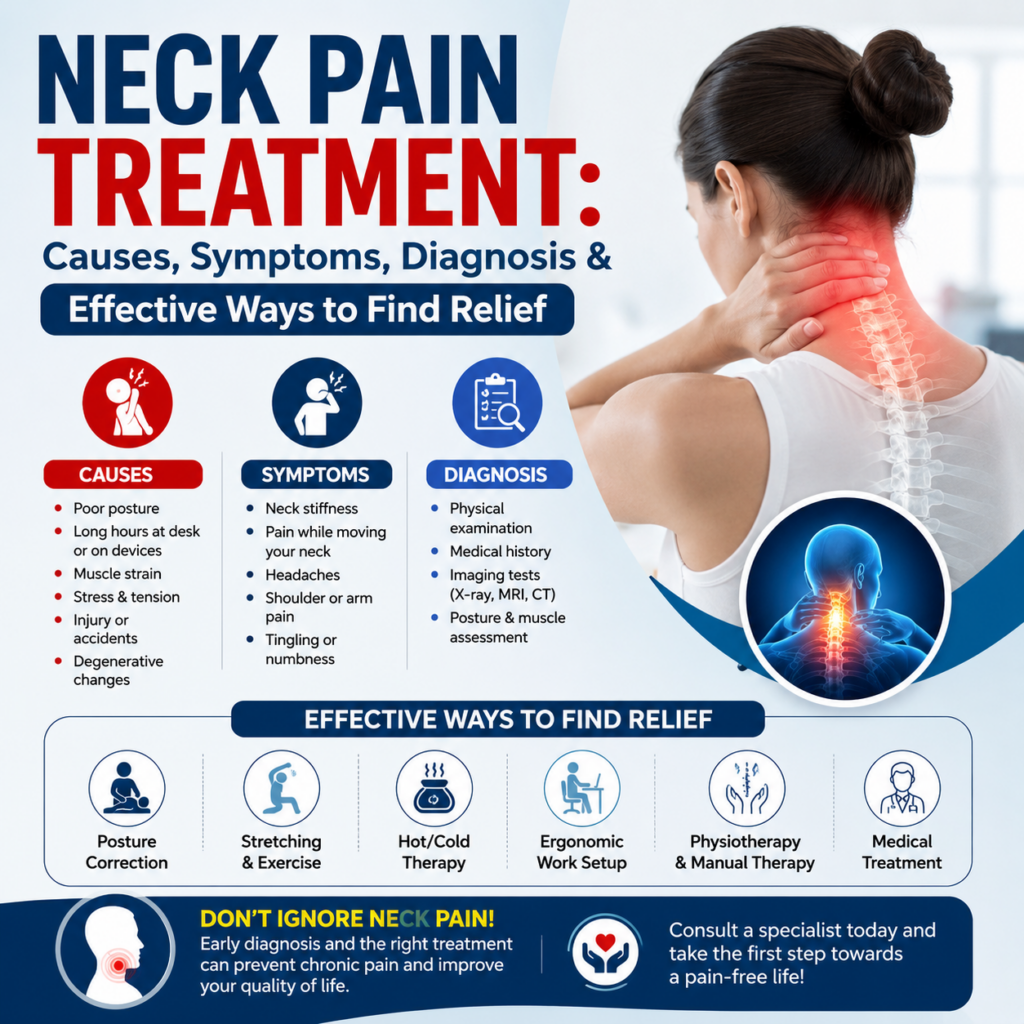
Neck pain is discomfort or stiffness in the cervical spine—the upper part of the spine that supports the head and allows a wide range of movement. Pain may be mild and temporary or severe enough to limit normal activities. In some cases, neck pain may spread to the shoulders, arms, or upper back.
Common Causes of Neck Pain
Several conditions can lead to neck pain, including:
- Poor posture while working or using smartphones
- Muscle strain from prolonged sitting
- Cervical spondylosis (age-related wear and tear)
- Herniated (slipped) cervical disc
- Whiplash injuries
- Sleeping in an improper position
- Stress-related muscle tension
- Osteoarthritis
- Pinched nerve
- Spinal stenosis
- Infections or inflammatory conditions (less common)
Symptoms of Neck Pain
The symptoms depend on the underlying cause but commonly include:
- Persistent neck pain or stiffness
- Difficulty turning or moving the neck
- Pain that spreads to the shoulders or arms
- Muscle tightness or spasms
- Headaches originating from the neck
- Tingling or numbness in the arms or fingers
- Weakness in the hands or arms
- Pain that worsens after prolonged sitting or computer work
If neck pain is accompanied by weakness, numbness, loss of balance, or difficulty walking, seek medical evaluation promptly.
Risk Factors
You may be more likely to experience neck pain if you:
- Spend long hours at a computer
- Frequently use mobile devices with your head bent forward
- Have poor posture
- Perform repetitive neck movements
- Lift heavy objects incorrectly
- Experience chronic stress
- Have age-related spinal degeneration
How is Neck Pain Diagnosed?
A healthcare provider will begin with a detailed medical history and physical examination. Depending on your symptoms, additional tests may include:
- X-rays to evaluate bone alignment
- MRI scan to detect disc problems and nerve compression
- CT scan for detailed bone imaging
- Nerve Conduction Studies (NCS) or Electromyography (EMG) if nerve damage is suspected
- Blood tests if infection or inflammatory disease is suspected
Accurate diagnosis helps determine the most effective treatment plan.
Effective Neck Pain Treatment Options
1. Medications
Your doctor may prescribe medications to reduce pain, inflammation, and muscle spasms. Always take medications under medical supervision.
2. Physical Therapy
Physical therapy plays a vital role in recovery by helping to:
- Improve flexibility
- Strengthen neck and shoulder muscles
- Correct posture
- Reduce stiffness
- Prevent future episodes
3. Lifestyle Modifications
Simple daily changes can significantly reduce neck pain:
- Maintain proper sitting posture
- Keep your computer monitor at eye level
- Avoid looking down at your phone for long periods
- Take stretching breaks every 30–60 minutes
- Use an ergonomic chair and workstation
4. Heat and Cold Therapy
- Apply cold packs during the first 24–48 hours after an injury to reduce swelling.
- Use warm compresses or heating pads afterward to relax tight muscles and improve blood flow.
5. Neck Exercises
Gentle stretching and strengthening exercises improve mobility and reduce muscle tension. These should be performed under the guidance of a healthcare professional or physiotherapist.
6. Interventional Pain Management
For persistent pain caused by nerve compression or arthritis, your doctor may recommend:
- Cervical epidural steroid injections
- Facet joint injections
- Nerve blocks
- Radiofrequency ablation in selected patients
7. Surgery
Surgery is considered only when conservative treatments fail or when there is:
- Significant nerve compression
- Progressive muscle weakness
- Cervical disc prolapse causing neurological symptoms
- Spinal cord compression (cervical myelopathy)
When Should You See a Doctor?
- Neck pain lasting longer than two weeks
- Pain following an accident or injury
- Pain that radiates into the arms
- Numbness or tingling in the hands
- Muscle weakness
- Fever with neck stiffness
- Difficulty walking or maintaining balance
- Loss of bladder or bowel control (medical emergency)
Early treatment can prevent complications and improve recovery.