
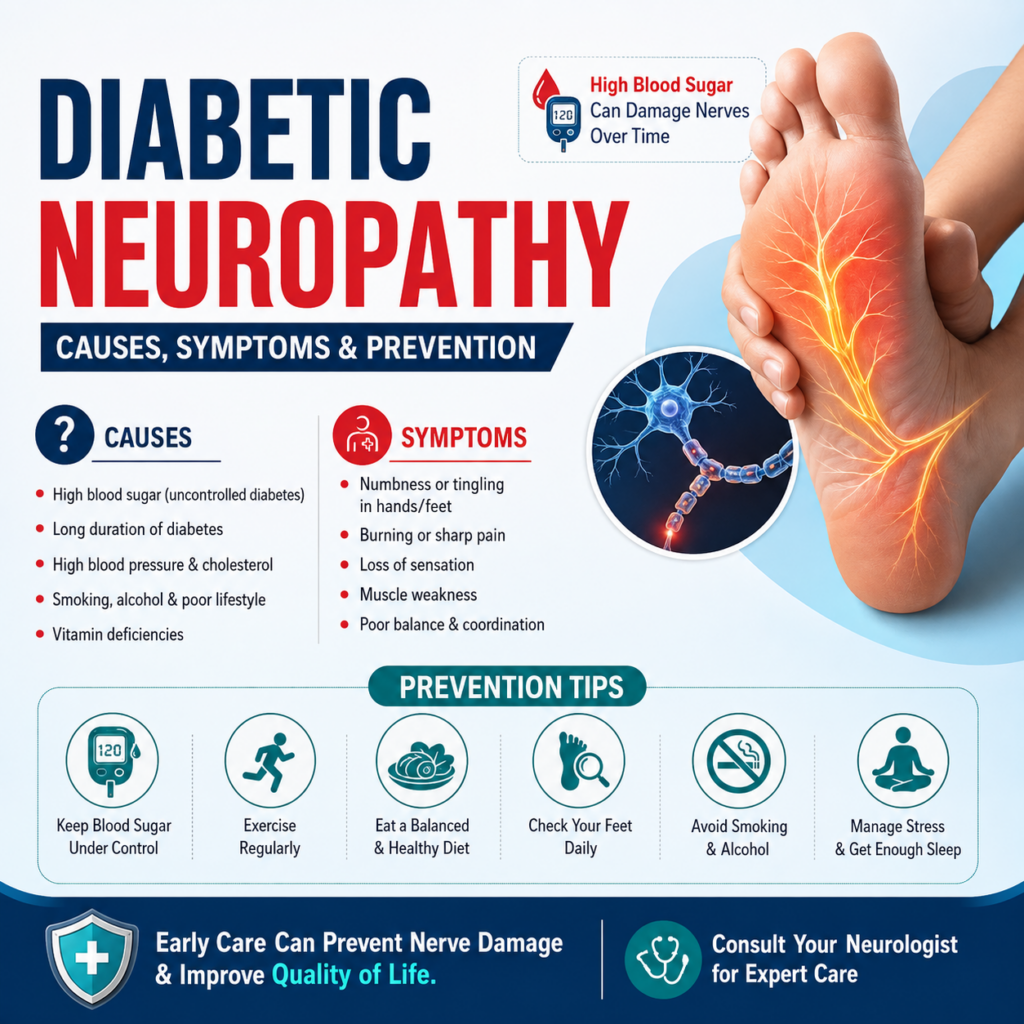
Understanding Diabetic Neuropathy: Protect Your Nerves Before It’s Too Late
Diabetes is a chronic condition that affects millions of people worldwide. While many people are aware of its impact on blood sugar levels, fewer realize that uncontrolled diabetes can damage the nerves over time. This condition, known as diabetic neuropathy, is one of the most common complications of diabetes and can significantly affect your quality of life if left untreated.
Early diagnosis, proper diabetes management, and timely neurological care can help prevent complications and preserve nerve function.
What Is Diabetic Neuropathy?
Diabetic neuropathy is a type of nerve damage caused by prolonged high blood sugar levels. Elevated glucose levels can injure nerves throughout the body, especially those in the feet, legs, hands, and arms.
Approximately half of people with diabetes may develop some form of neuropathy during their lifetime, particularly if blood sugar remains poorly controlled.
Types of Diabetic Neuropathy
1. Peripheral Neuropathy
This is the most common type and affects the feet and legs first, followed by the hands and arms.
Common Symptoms
- Numbness in the feet or hands
- Tingling or “pins and needles” sensation
- Burning pain
- Sharp or stabbing pain
- Increased sensitivity to touch
- Muscle weakness
- Loss of balance
- Difficulty walking
2. Autonomic Neuropathy
This affects the nerves that control internal organs.
Symptoms may include:
- Dizziness when standing
- Digestive problems
- Constipation or diarrhea
- Bladder problems
- Sexual dysfunction
- Excessive or reduced sweating
- Changes in heart rate
3. Proximal Neuropathy
Usually affects the hips, thighs, or buttocks.
Symptoms include:
- Sudden severe pain
- Difficulty standing up
- Weakness in the legs
What Causes Diabetic Neuropathy?
The primary cause is persistent high blood sugar, which damages nerves and the small blood vessels that supply them with oxygen and nutrients.
Other contributing factors include:
- Long-standing diabetes
- Poor blood sugar control
- High blood pressure
- High cholesterol
- Smoking
- Obesity
- Kidney disease
- Excessive alcohol consumption
- Increasing age
Symptoms of Diabetic Neuropathy
Symptoms often develop gradually and may go unnoticed in the early stages.
Early Symptoms
- Tingling in the toes or fingers
- Mild numbness
- Burning sensation
- Sensitivity to touch
Advanced Symptoms
- Severe nerve pain
- Loss of sensation
- Muscle weakness
- Poor coordination
- Difficulty walking
- Foot ulcers
- Frequent falls
Why Is Early Diagnosis Important?
Ignoring diabetic neuropathy can lead to serious complications, including:
- Foot ulcers
- Chronic pain
- Foot infections
- Loss of balance
- Increased risk of falls
- Charcot foot (a serious deformity of the foot)
- In severe cases, amputation
Early diagnosis allows treatment to slow progression and reduce the risk of complications.
When Should You Visit a Neurologist?
Consult a neurologist if you experience:
- Persistent numbness in your feet or hands
- Burning or shooting pain
- Tingling that worsens over time
- Difficulty walking
- Muscle weakness
- Loss of balance
- Foot wounds that do not heal
- Unexplained pain or loss of sensation
Prompt evaluation can help identify the extent of nerve damage and guide appropriate treatment.