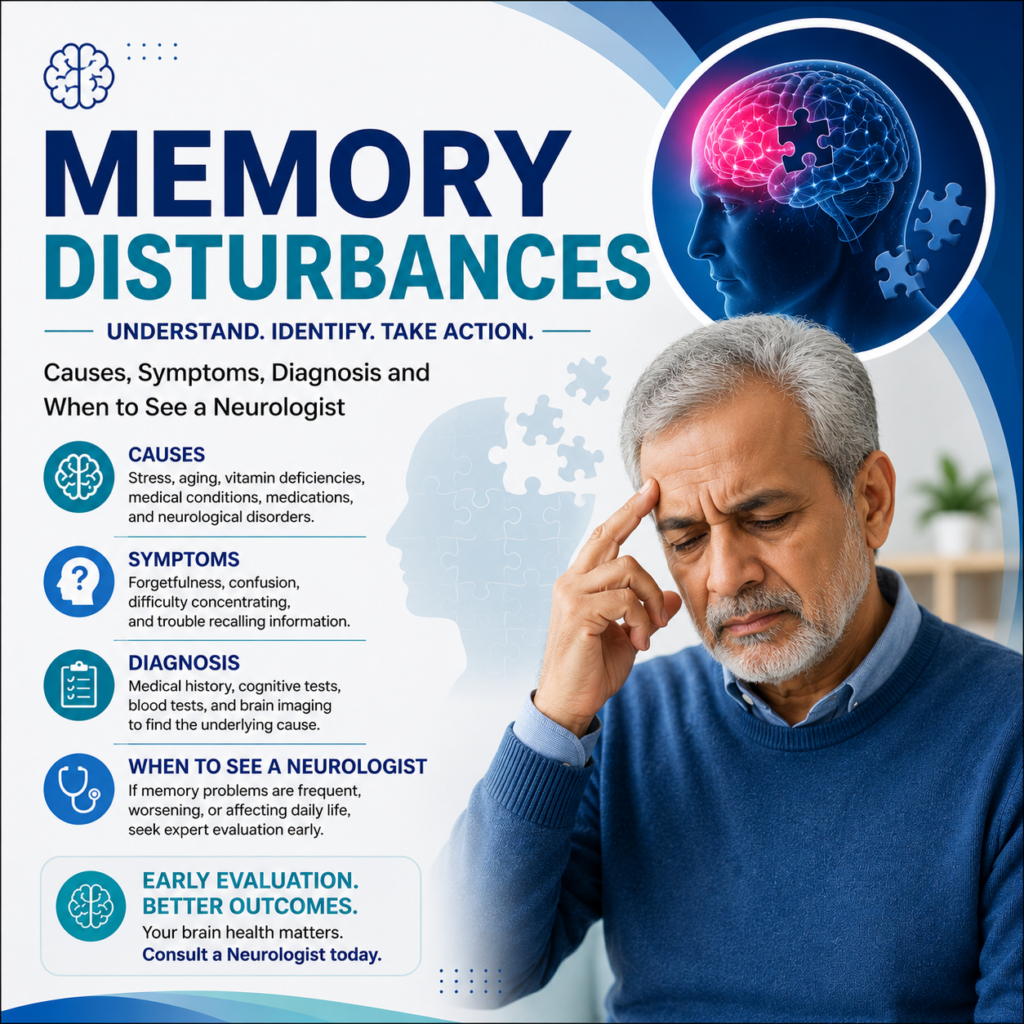
Forgetting a name, misplacing your keys, or occasionally struggling to remember something can happen to anyone. However, persistent or worsening memory disturbances may sometimes indicate an underlying neurological or medical condition.
Understanding the causes of memory problems and recognizing when professional evaluation is needed can help with early diagnosis and appropriate management.
What Are Memory Disturbances?
Memory disturbances refer to difficulties with remembering, learning, storing, or recalling information. They can range from occasional forgetfulness to significant problems that interfere with daily activities.
Memory problems may affect:
- Recent memories
- Long-term memories
- Concentration and attention
- Learning new information
- Finding the right words
- Remembering appointments or important tasks
- Recognizing familiar people or places
Not every memory problem is a sign of dementia. Several temporary or treatable conditions can also affect memory.
Common Symptoms of Memory Problems
Memory disturbances can present differently in different people. Common signs include:
- Frequently forgetting recently learned information
- Asking the same questions repeatedly
- Misplacing commonly used objects
- Forgetting appointments or important dates
- Difficulty following conversations
- Trouble finding familiar words
- Difficulty learning new information
- Getting confused in familiar surroundings
- Increasing dependence on others for everyday tasks
When these symptoms become frequent or progressively worse, a neurological evaluation may be appropriate.
Common Causes of Memory Disturbances
Memory problems can have many possible causes.
1. Stress and Anxiety
High levels of stress can affect concentration and the ability to store and recall information. Anxiety may also make it difficult to focus, which can feel like memory loss.
2. Sleep Problems
Poor sleep or insufficient sleep can negatively affect attention, concentration, and memory. Addressing sleep problems may improve cognitive functioning in some people.
3. Vitamin Deficiencies
Certain nutritional deficiencies, including vitamin B12 deficiency, may contribute to cognitive or neurological symptoms.
4. Thyroid and Other Medical Conditions
Some medical conditions can cause cognitive changes or contribute to memory difficulties. A doctor may recommend appropriate blood tests based on the individual’s symptoms.
5. Medications and Substance Use
Some medications and excessive alcohol consumption can affect memory or concentration. Never stop a prescribed medication without discussing it with your doctor.
6. Head Injury
A traumatic brain injury can sometimes cause problems with memory, attention, or concentration.
7. Neurological Conditions
Memory disturbances may occur as part of neurological disorders such as dementia, Alzheimer’s disease, Parkinson’s disease, epilepsy, stroke, or other conditions affecting the brain.
Memory Loss vs Normal Forgetfulness
Occasional forgetfulness is common. For example, forgetting where you placed your phone but remembering later may not necessarily indicate a serious problem.
More concerning signs include progressive memory loss that interferes with everyday life.
For example:
- Forgetting important information repeatedly
- Getting lost in familiar places
- Having difficulty managing finances or medications
- Struggling to perform familiar tasks
- Significant changes in language or judgment
- Depending increasingly on others for routine activities
A neurologist can help determine whether these changes are related to normal aging, a medical condition, or a neurological disorder.
When Should You See a Neurologist for Memory Problems?
Consider consulting a neurologist if memory problems:
- Are becoming increasingly frequent
- Affect work or daily activities
- Interfere with communication
- Are accompanied by personality or behavioral changes
- Occur along with balance or movement problems
- Are associated with confusion or disorientation
- Develop after a head injury
- Occur along with weakness, speech problems, or other neurological symptoms
Early assessment can help identify potentially treatable causes and guide appropriate management.
How Are Memory Disturbances Diagnosed?
A neurologist may begin with a detailed medical history and neurological examination.
The evaluation may include:
Medical and Medication History
The doctor may ask about your symptoms, existing medical conditions, sleep, lifestyle, medications, and family history.
Cognitive Assessment
Simple tests may be used to evaluate areas such as:
- Memory
- Attention
- Language
- Orientation
- Problem-solving
- Concentration
More detailed neuropsychological testing may sometimes be recommended.
Blood Tests
Depending on the symptoms, blood tests may be used to look for potentially reversible contributors such as vitamin deficiencies or thyroid problems.
Brain Imaging
MRI or CT scans may be recommended in selected cases to look for structural changes or other abnormalities in the brain.
The exact tests required depend on the individual’s symptoms and clinical examination.
Can Memory Problems Be Treated?
Treatment depends on the underlying cause.
If memory difficulties are related to a reversible factor such as certain medications, nutritional deficiencies, sleep problems, or another medical condition, addressing the underlying problem may help.
For neurological conditions associated with cognitive impairment, treatment may include medications when appropriate, cognitive strategies, rehabilitation, lifestyle modifications, and support for patients and caregivers.
Lifestyle Habits That Support Brain Health
Healthy lifestyle habits may contribute to overall brain health:
- Get adequate and regular sleep
- Stay physically active
- Eat a balanced diet
- Maintain social connections
- Keep your mind mentally active
- Manage stress
- Control blood pressure, blood sugar, and cholesterol
- Avoid smoking
- Limit alcohol consumption
- Keep regular medical check-ups
These habits support overall health but cannot guarantee prevention of every neurological condition.
Sudden Memory Loss: When Is It an Emergency?
Sudden confusion or sudden memory problems accompanied by other neurological symptoms should not be ignored.
Seek urgent medical attention if sudden memory or cognitive changes occur together with:
- Difficulty speaking or understanding speech
- Facial drooping
- Weakness or numbness on one side of the body
- Sudden severe headache
- Loss of balance or coordination
- Seizures
- Loss of consciousness
These symptoms may indicate a medical emergency such as stroke or another acute neurological condition.