
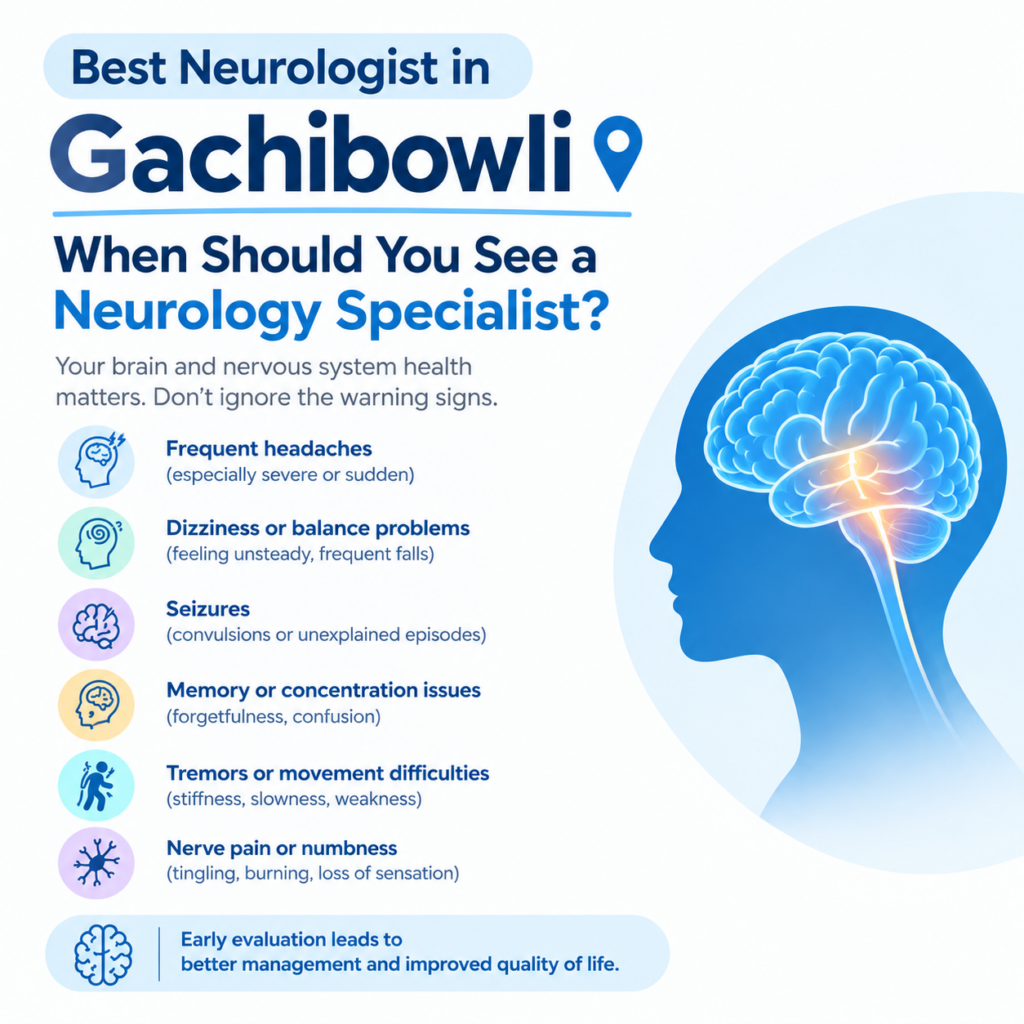
Headaches, dizziness, numbness, seizures, memory problems and unexplained weakness can sometimes be more than temporary health concerns. These symptoms may be related to the brain, spinal cord or peripheral nerves and may require evaluation by a neurologist.
For people living or working in Gachibowli and surrounding areas of Hyderabad, knowing when to seek neurological care can help with early diagnosis and appropriate treatment.
What Does a Neurologist Do?
A neurologist is a medical specialist who diagnoses and treats disorders affecting the:
- Brain
- Spinal cord
- Peripheral nerves
- Muscles and nerve-muscle connections
Neurologists commonly manage conditions such as migraine, epilepsy, stroke, vertigo, Parkinson’s disease, neuropathy, memory disorders and other neurological conditions.
When Should You See a Neurologist?
You don’t need to wait for symptoms to become severe before seeking specialist advice. Consider consulting a neurologist if you experience persistent, recurring or unexplained neurological symptoms.
1. Frequent or Severe Headaches
Occasional headaches can have many causes. However, frequent headaches, migraines that interfere with daily activities, headaches that are becoming more severe, or headaches associated with neurological symptoms deserve medical evaluation.
A neurologist can help determine whether your symptoms are related to migraine or another neurological condition.
2. Dizziness or Vertigo
Feeling that the room is spinning, difficulty maintaining balance, or repeated episodes of dizziness may require evaluation.
Vertigo can have several causes, including problems involving the inner ear or nervous system. A specialist can help identify the underlying cause.
3. Numbness or Tingling
Persistent numbness, burning, pins-and-needles sensations or weakness in the hands, feet, arms or legs can sometimes indicate nerve problems.
Possible causes include peripheral neuropathy, nerve compression, vitamin deficiencies and metabolic conditions such as diabetes.
4. Seizures or Unexplained Episodes
A seizure should always be medically evaluated, particularly if it is the first episode.
A neurologist can investigate possible causes and determine whether further tests, treatment or monitoring are required.
5. Sudden Weakness or Difficulty Speaking
Sudden weakness or numbness—especially on one side of the body—difficulty speaking, facial drooping, sudden vision problems or severe loss of balance can be warning signs of a stroke.
Do not wait for a routine appointment if these symptoms occur suddenly. Seek emergency medical care immediately.
Remember the FAST warning signs:
F – Face: Does one side of the face droop?
A – Arms: Is one arm weak or numb?
S – Speech: Is speech slurred or difficult to understand?
T – Time: Call emergency medical services immediately.
6. Memory or Cognitive Changes
Occasional forgetfulness is common. However, progressive memory problems, difficulty finding words, confusion, changes in judgment or difficulty managing familiar daily activities should be evaluated.
Early assessment can help identify possible causes and guide appropriate management.
7. Tremors or Movement Problems
Unexplained shaking, stiffness, slowed movements, difficulty walking or changes in coordination can have several causes.
A neurologist can assess whether these symptoms may be associated with conditions such as Parkinson’s disease or other movement disorders.
8. Sleep-Related Neurological Symptoms
Certain neurological conditions can affect sleep. Excessive daytime sleepiness, unusual movements during sleep or other unexplained nighttime neurological symptoms may warrant medical evaluation.
What Conditions Does a Neurologist Treat?
Depending on their area of expertise, neurologists may diagnose and manage conditions including:
- Migraine and other headache disorders
- Vertigo and balance disorders
- Epilepsy and seizures
- Stroke and stroke-related conditions
- Parkinson’s disease and movement disorders
- Peripheral neuropathy
- Memory disorders and dementia
- Nerve and muscle disorders
- Multiple sclerosis and other neurological disorders