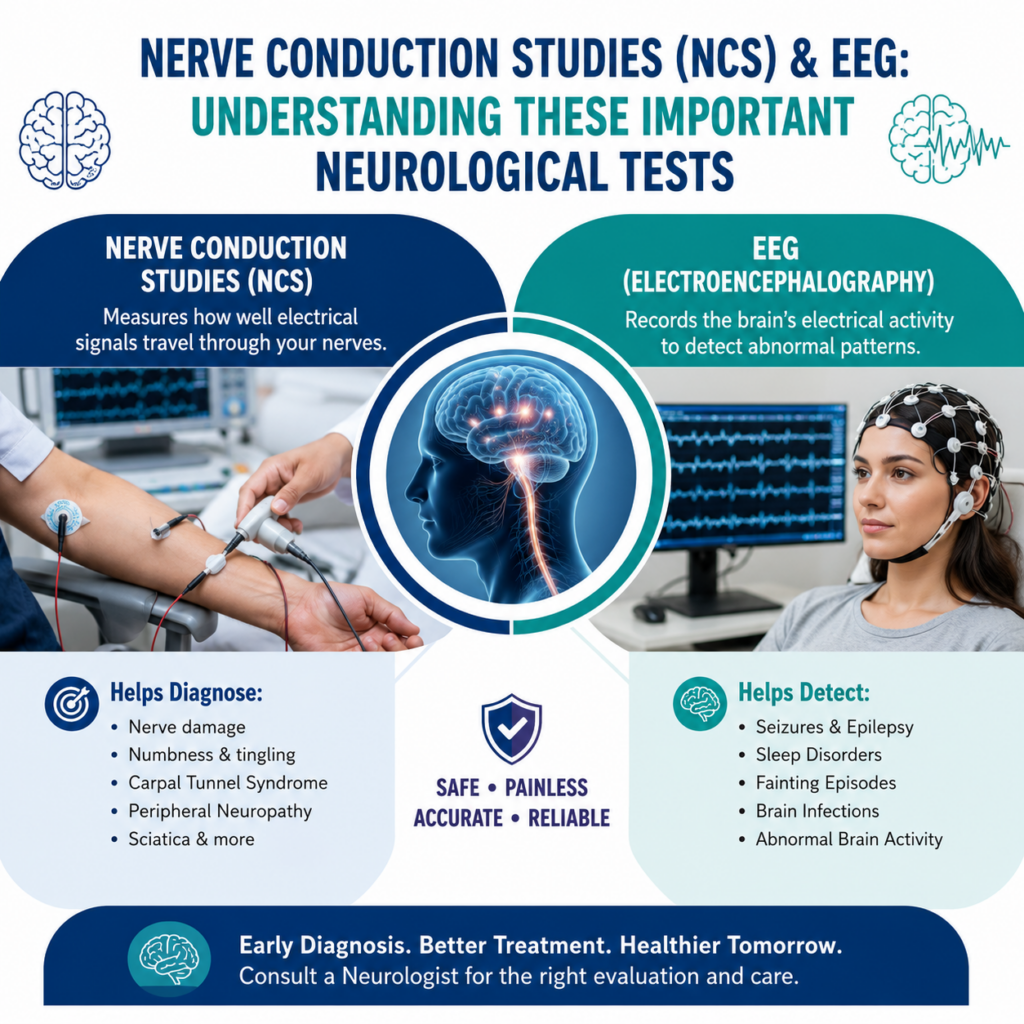
The nervous system plays a vital role in controlling every function of the body, from movement and sensation to thinking and memory. When symptoms such as numbness, tingling, weakness, seizures, or unexplained neurological issues occur, doctors may recommend specialized tests like Nerve Conduction Studies (NCS) and Electroencephalography (EEG) to diagnose the underlying condition accurately.
What is a Nerve Conduction Study (NCS)?
A Nerve Conduction Study is a diagnostic test that measures how quickly and effectively electrical signals travel through your nerves. It helps neurologists identify nerve damage and determine the severity of neurological conditions.
Why is NCS Performed?
Your doctor may recommend NCS if you experience:
- Numbness or tingling in the hands or feet
- Muscle weakness
- Burning sensations
- Chronic nerve pain
- Suspected nerve injuries
- Carpal Tunnel Syndrome
- Peripheral Neuropathy
- Sciatica
- Guillain-Barré Syndrome
How is the Test Performed?
Small electrodes are placed on the skin over specific nerves and muscles. Mild electrical impulses are delivered to stimulate the nerves, and the response is recorded. The procedure is safe and usually takes 30–60 minutes.
Benefits of NCS
- Helps diagnose nerve disorders accurately
- Identifies the location of nerve damage
- Assists in treatment planning
- Monitors disease progression and recovery
What is an EEG (Electroencephalography)?
An EEG is a non-invasive test used to record the brain’s electrical activity. It is commonly used to diagnose and monitor conditions affecting brain function.
Why is EEG Performed?
An EEG may be recommended for:
- Seizures and Epilepsy
- Unexplained loss of consciousness
- Fainting episodes
- Sleep disorders
- Memory problems
- Brain infections
- Head injuries
- Evaluation of abnormal brain activity
How is an EEG Performed?
Small electrodes are attached to the scalp using a special paste or cap. These electrodes record the brain’s electrical signals, which are displayed as wave patterns for analysis by a neurologist.
The procedure is painless and generally takes 30–60 minutes.
Benefits of EEG
- Detects abnormal brain activity
- Helps diagnose epilepsy and seizure disorders
- Assists in evaluating sleep-related disorders
- Supports neurological diagnosis and treatment planning
- Safe and non-invasive
When Should You Consult a Neurologist?
Seek medical evaluation if you experience:
- Frequent headaches
- Seizures
- Unexplained weakness
- Numbness or tingling
- Loss of consciousness
- Memory difficulties
- Persistent dizziness
- Muscle cramps or nerve pain
Early diagnosis through tests such as NCS and EEG can help prevent complications and ensure timely treatment.